In an era where industrial safety and domestic security are of paramount importance, the engineering behind protective structures has evolved from simple barriers to highly sophisticated life-saving systems. Among these, the blast door stands as a critical component. Whether installed in a high-risk petrochemical facility, a government data center, or a private storm shelter, a blast door is often the final line of defense between safety and catastrophe. Understanding the mechanics, standards, and strategic implementation of these doors is essential for any project focused on hazard mitigation.
The Physics of Protection
A common misconception is that a blast door is simply a heavy door. In reality, the effectiveness of a blast-resistant barrier is determined by its ability to manage energy, not just its mass. When an explosion occurs, it creates a shockwave that moves outward at supersonic speeds. This wave exerts two primary forces: peak pressure and impulse.
Peak pressure is the maximum force applied to the door, usually measured in pounds per square inch (PSI). However, the duration of that pressure, the impulse, is equally important. A door must be engineered to withstand the initial positive phase of the blast and the subsequent negative phase (a vacuum effect that can pull a door outward). If a door is not designed to handle these alternating forces, the hardware, such as hinges and latches, can fail, turning the door itself into a dangerous projectile.
Safety Standards and Personnel Security
The primary goal of any blast-rated door is the protection of life. The industry relies on rigorous testing standards to ensure performance. Organizations like the American Society for Testing and Materials (ASTM) and Process Industry Practices (PIP) provide frameworks for evaluating how doors react under extreme stress.
For personnel working in high-risk zones, such as refineries or chemical processing plants, the hazard level of a door is a vital metric. A low hazard rating means the door may suffer permanent deformation but will remain in its frame, preventing fragments from entering the protected space. A high hazard rating might imply the door holds but allows some debris or significant pressure leakage. Selecting the correct rating requires a thorough blast load analysis of the specific site.
Engineering Excellence
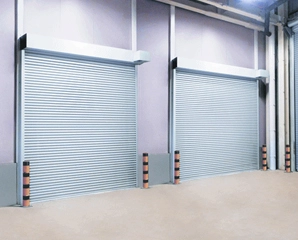
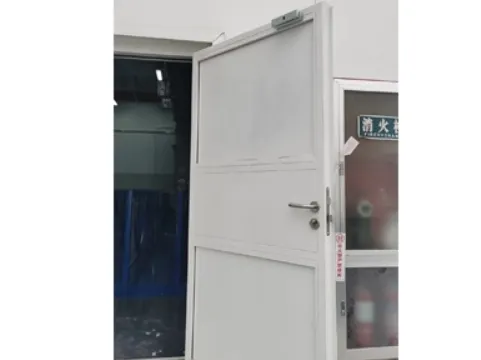
When architects and safety engineers move from the planning phase to procurement, they require solutions that combine technical precision with operational reliability. This is where specialized manufacturers play a decisive role. For instance, the blast rated doors from SEED GREEN represent the cutting edge of this field.
These doors are designed to meet diverse industrial requirements, ranging from low-pressure architectural needs to high-pressure industrial applications. SEED GREEN focuses on the structural synergy between the door leaf, the reinforced frame, and the specialized heavy-duty hardware. By integrating advanced metallurgy with precision engineering, these products ensure that the integrity of the building envelope is maintained even under the most severe loading conditions. Their solutions demonstrate that high-level security does not have to come at the cost of ease of use, offering smooth operation for daily foot traffic while remaining ready for an emergency.
The Importance of the Frame and Installation
A blast door is only as strong as the wall it is attached to. One of the most critical aspects of blast-resistant design is the anchoring system. Even a door rated for 50 PSI will fail if the frame is ripped out of the concrete.
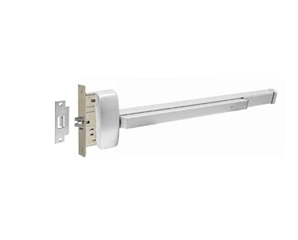
Proper installation involves embedding the frame deeply into the structural masonry or welding it to a reinforced steel skeleton. Furthermore, the hardware, the hinges, deadbolts, and closing mechanisms, must be capable of absorbing and transferring the energy of the blast into the surrounding structure. This is why many high-end blast doors utilize multi-point latching systems, which distribute the force across several contact points rather than a single bolt.
Versatile Applications
While we often associate blast doors with military bunkers, their applications are surprisingly broad:
Petrochemical and Oil & Gas: Protecting control rooms near processing units where vapor cloud explosions (VCEs) are a potential risk.
Data Centers: Guarding against external threats to ensure the continuity of digital infrastructure.
Government and Embassies: Providing a secure perimeter against forced entry and explosive attacks.
Safe Rooms and Shelters: Offering homeowners protection against extreme weather events, such as tornadoes, which can generate wind pressures similar to low-level explosions.
In the field of high-stakes engineering, there is no room for error. A blast door is a sophisticated piece of safety equipment that requires an understanding of fluid dynamics, material science, and structural engineering. By adhering to the standards set by organizations like ASTM and choosing proven solutions like those offered by SEED GREEN, facility managers and homeowners alike can create environments that are truly resilient.
As we continue to build in increasingly complex and high-risk environments, the importance of a well-engineered blast door cannot be overstated. It is a silent sentry, engineered to perform perfectly in the one second it is truly needed.


 English